
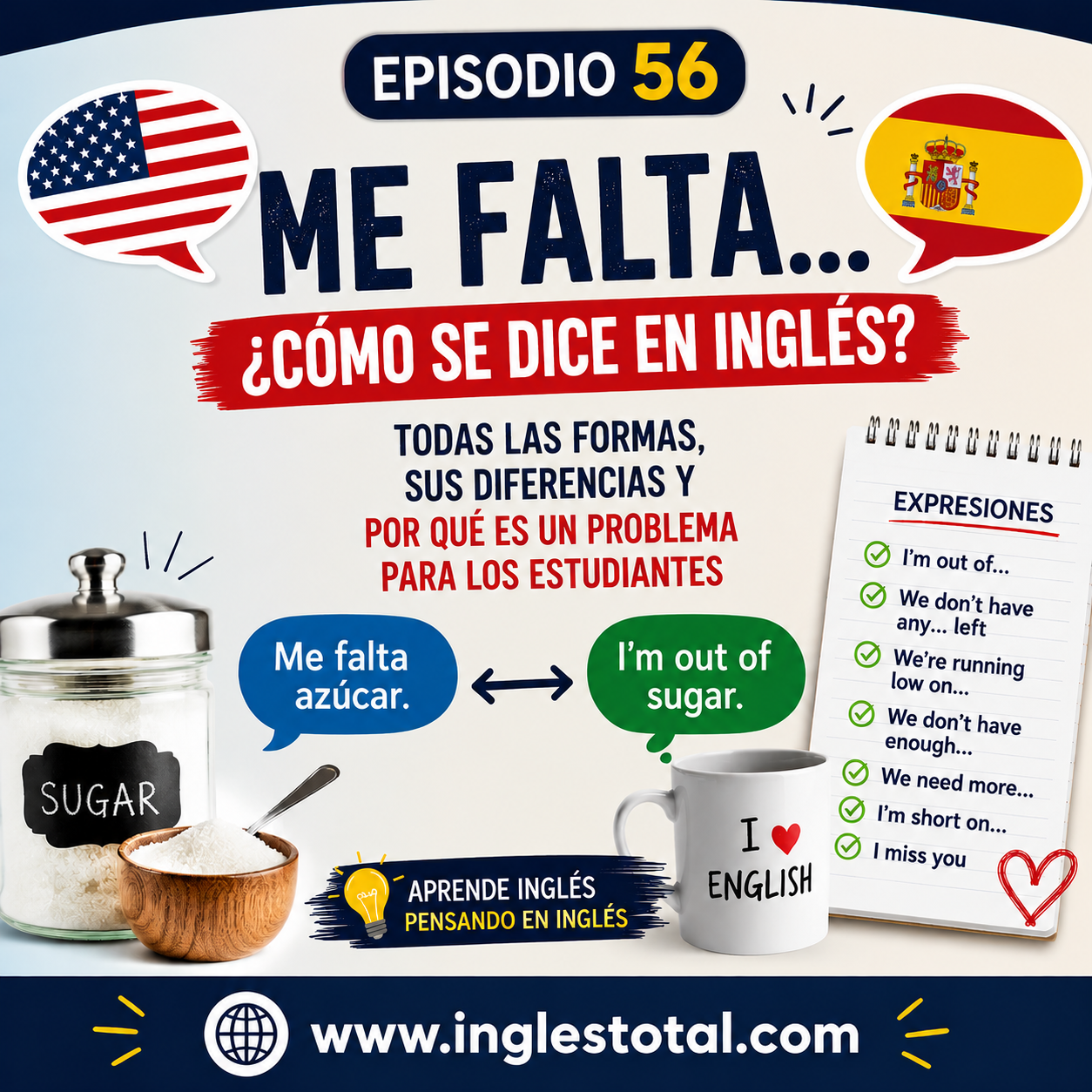
Como se dice “Me hace falta algo” en Inglés
SECCION: Conversation / Speaking Activity – Clases de conversación #56 – Como decir “ESPERO” en inglés

Podcast: Download
Subscribe: Apple Podcasts | Spotify | TuneIn | RSS
Hoy tenemos una nueva publicación en nuestra sección y curso de Speaking o conversación en inglés. Vamos a aprender como expreser que algo o alguien hace falta en inglés. UNASE a nuestra comunidad en WHATSAPP y mande sus preguntas. Siga este enlace https://chat.whatsapp.com/I81V7uakMSk2bCmdD2qibE?mode=ems_copy_t .Tambien siga la clase con el audio que incluye una conversación al final para solventar lo aprendido. Esto le permitirá ser un poco mas natural cuando se expresa en inglés Para poder ver todas nuestras lecciones hasta la fecha en esta sección pueden ir a ESTE VINCULO.
Esta clase escrita viene acompañada de un audio que pueden encontrar al comienzo de esta publicación. Tampoco olviden de seguir redes sociales en Facebook y Twitter para más información de nuestros cursos gratis y sigan. Nuestros audios están en SPOTIFY (enlace aquí) y los que quieran compararme un café o donar para que esta pagina siga adelante pueden hacerlo usando este vinculo.
Introducción
How to Say “Me Falta…” in English
1. Cuando algo se acabó
“I’m out of…”
This is the most natural expression when nothing remains.
Examples
- I’m out of sugar.
- We’re out of milk.
- We’re out of coffee.
Meaning
There is zero left.
Spanish Equivalent
- Me falta azúcar.
- No queda azúcar.
- Se acabó el azúcar.
2. Cuando no queda nada
“We don’t have any… left”
Another very natural option.
Examples
- We don’t have any sugar left.
- There isn’t any milk left.
- We don’t have any bread left.
Meaning
Nothing remains.
Difference from “I’m out of…”
Both are natural, but:
- I’m out of sugar sounds shorter and more conversational.
- We don’t have any sugar left emphasizes that nothing remains.
3. Cuando queda poco
“We’re running low on…”
Use this when there is still some left, but not much.
Examples
- We’re running low on sugar.
- We’re running low on gas.
- We’re running low on paper.
Meaning
There is a small amount remaining.
Important Difference
- out of = zero
- running low on = very little remains
4. Cuando se necesita mas
“We need more…”
This is extremely common in everyday English.
Examples
- We need more sugar.
- We need more milk.
- We need more eggs.
Meaning
The focus is on buying or getting more.
5. Cuando no hay suficiente
“We don’t have enough…”
Use this when there is some, but it is insufficient.
Examples
- We don’t have enough sugar for the cake.
- We don’t have enough milk for breakfast.
Meaning
There is some quantity available, but it is not enough.
Important Difference
- out of = nothing
- not enough = some exists, but insufficient
6. Cuando algo es escaso
“I’m short on…”
Very natural in conversational English.
Examples
- I’m short on sugar.
- We’re short on cash.
- I’m short on time.
Meaning
There is a shortage.
7. El verbo LACK
Students sometimes learn the verb lack and try to use it everywhere.
Examples
❌ I lack sugar.
❌ I’m lacking sugar.
These are grammatically possible, but they sound formal, technical, or unnatural in daily conversation.
Native speakers would usually say:
✔ I’m out of sugar.
✔ We need more sugar.
✔ We don’t have enough sugar.
8. Cuando te hace falta alguien
I MISS YOU. This is the natural English equivalent.
Examples
- I miss you.
- I really miss you.
Meaning
You feel the emotional absence of someone.
Why Students Get Confused
Many learners try literal translations such as:
❌ You are missing to me.
❌ I lack you.
❌ You are lacking in my life.
These sound unnatural because English does not use “lack” for romantic emotions in normal conversation.
The Real Reason This Topic Is Difficult
The main problem is that Spanish uses one single structure:
“Faltar”
But English divides the meaning into different categories:
| Spanish | Natural English |
|---|---|
| Me falta azúcar | I’m out of sugar |
| Me falta dinero | I need money |
| Me falta tiempo | I don’t have enough time |
| Me falta práctica | I need more practice |
| Me faltas tú | I miss you |
This forces students to stop translating literally and start thinking about the exact situation.
Final Tip for Students
When translating “me falta…”, never translate word for word.
Instead, ask yourself:
- Is there nothing left?
- Is there only a little left?
- Is it insufficient?
- Do I need more?
- Is it emotional?
Once you identify the situation, the correct English expression becomes much easier and more natural.
Básico | Pre intermedio | Intermedio (nuevo) |Clases de Conversación | Lectura | Pronunciación |Material y Recursos | Vocabulary


Leave a Reply